


 Language



 Oct 23, 2026
 109
On October 20, 2026, LI AUTO presented its Lianshan electric technology system at Power Day, outlining an integrated approach to battery development, electric drive systems, charging infrastructure and cloud-based safety monitoring. The system aims to address key challenges in electric mobility, including charging speed, driving range, low-temperature performance, battery durability, and the convenience of long-distance charging.
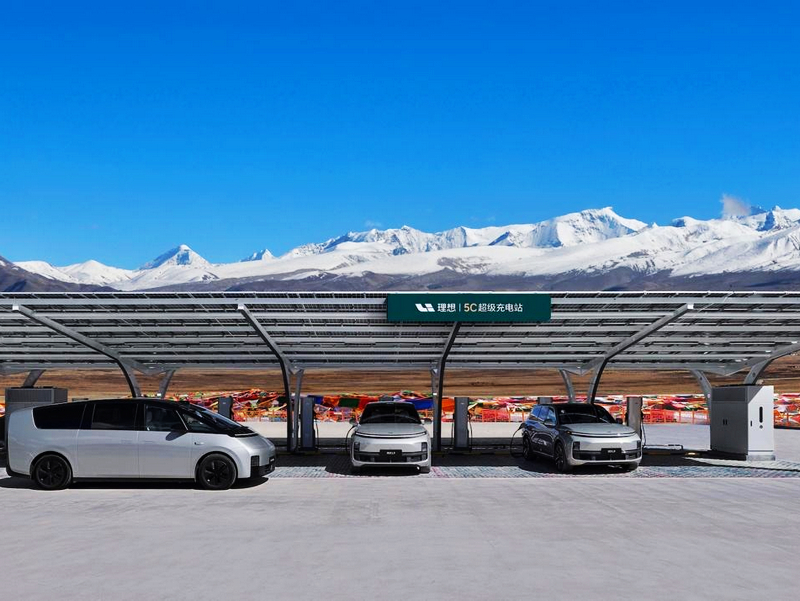
At the battery level, LI AUTO introduced material and structural innovations designed to support 5C ultra-fast charging while maintaining energy density. Gradient-porosity electrodes improve lithium-ion transport, while optimized battery-pack structures increase space utilization. The company reports that the new battery technology supports a pure-electric range of up to 430 km for the latest LI AUTO L8 and 780 km for the 2026 LI AUTO i6 dual-motor-independent-drive.
The system also integrates battery management algorithms to improve range estimation and cold-weather performance. The ATR adaptive trajectory reconstruction algorithm keeps battery state-of-charge estimation errors within 3%, while the APC adaptive power algorithm dynamically adjusts power output based on cell conditions. Additional thermal-management improvements recover battery waste heat for cabin heating, helping reduce energy consumption in cold weather.
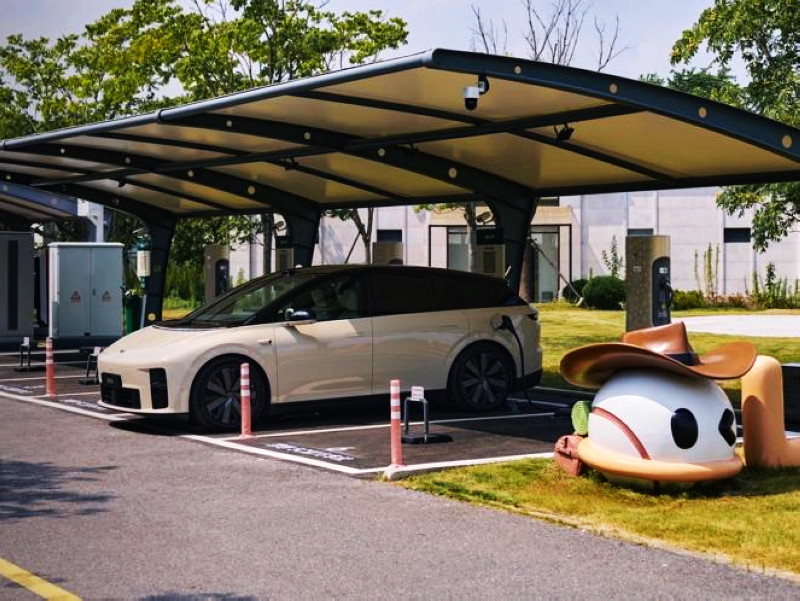
Battery durability and safety are addressed through coordinated material, hardware and software design. Improvements to electrode materials, cell resistance and cooling structures aim to reduce degradation and heat accumulation during high-rate charging. The battery system combines physical protection, thermal management, manufacturing traceability and vehicle-charger-cloud monitoring to identify potential risks. LI AUTO also outlined battery warranty commitments and a design target of maintaining at least 75% battery health after eight years or 160,000 km for vehicles equipped with its 5C charging battery technology in 2026.
For electric drive systems, LI AUTO highlighted advances in motor materials, high-voltage connections and manufacturing quality control. Its CAR119 aluminum rotor material is designed to improve mechanical strength and electrical conductivity, while a distributed terminal-free connection structure reduces electrical transmission losses. The company reports that these improvements can increase driving range and improve powertrain reliability. Continuous monitoring of vehicle operating data is also used to support predictive maintenance and improve long-term system performance.
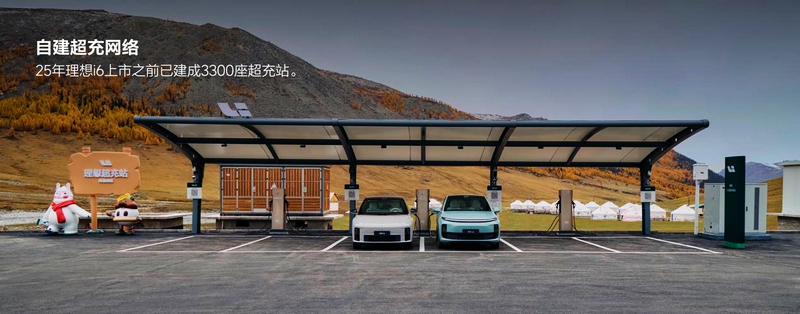
Charging infrastructure forms another core part of the Lianshan system. LI AUTO reported a network of 4,200 supercharging stations and 23,000 charging piles, with more than 94% of charging piles rated at 4C or 5C. The network covers major highway corridors and combines route planning, automated payment, station monitoring and vehicle-cloud thermal management. The company is also developing lighter charging connectors and expanding high-power charging facilities to improve convenience during long-distance travel.
By integrating battery chemistry, intelligent battery management, efficient electric drive systems and high-power charging infrastructure, LI AUTO is pursuing a system-level approach to electric vehicle performance. Rather than focusing on individual specifications alone, the Lianshan system emphasizes the coordination of vehicle hardware, software and charging services to improve everyday usability, safety and long-term ownership experience.




 Facebook
 Linkedin
 Youtube
 Twitter
 Instagram
 TikTok
Quantum Dynamics Limited







 +86-21-6109-6358
 +86-21-6109-6358
 +86-157-3713-7170
+86-152-5620-9535

 Suite 5503, Shanghai Tower, No. 501 Yincheng Middle Road, Pudong New Area, Shanghai 200120, China